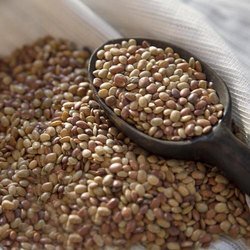
Dolichos biflorus (Kulthi) is a branched, suberect, and downing herb, native to most parts of India, and found at altitudes of up to 1000 m, whose seeds can be cooked and eaten. Nutrition plays a key role in building immunity and preventing noncommunicable diseases to a certain extent. Phytochemical analysis showed that the kulthi extract contains alkaloids, saponins, flavonoids, carbohydrates, proteins, and tannins, which may contribute to its anti-inflammatory and antioxidant activity. In Ayurveda, the seed of Dolichos biflorus or Kulthi is used in the treatment of piles, joint inflammation & pain, constipation, urinary calculi, cough, edema, asthma, leucorrhoea, etc. Soup or extract prepared from seeds is also beneficial in enlarged liver and spleen. The Kulthi seeds have been reported to show antilithiatic, antihepatotoxic, and hypolipidemic activity, and are involved in lowering the level of blood sugar and total cholesterol.
Uses:- The paste of Kulatta seeds is used for fomentation to relieve localized swelling. The seeds stimulate and increase sweating, thus opening the sweat pores of the body to push out the toxins from the body.
The seed of the herb is powdered, burnt and the smoke coming from it is inhaled to relieve hiccups. Cold infusion (Hima) of the seeds of horse gram is taken in a dosage of 80-100ml per day to treat renal calculi, difficulty in micturition, and pain in the urinary bladder.
| Family | Papilionaceae | Odour | Characteristic odour |
| Latin Name | Dolichos biflorus | Herb Extract Ratio | 10:1 |
| Sanskrit Name | Kulatha, Kulastha | Water solubility | Water soluble NLT 70% |
| Common Name | Kulthi , Horse-Gram | Alkaloid | Saponnins NLT 20% |
| Solvent Used | Water | Taste | Astringent |
| Storage Condition | Store in a Dry and cool place in double PP bag with container. | Appearance | Brown Powder |
Physicochemical characters including moisture content, sample and extract decides the deterioration time. High water content in powder and aqueous extract are found to get deteriorated due to fungal attack. Loss in weight of seed powder on drying at 1050C was found to be 1.45 %. Analytical results like total ash value was 7.72 % which indicate the amount of minerals present in the sample. The amount of acid-insoluble siliceous matter (3.01 %) was higher than water-soluble ash (2.85%). The methanolic extractive value is comparatively higher (15.21 % w/w) than the water soluble extractive value (8.50% w/w). The extracts were subjected to preliminary phytochemical screening and the results certified the presence of alkaloids, phenols, flavonoids, steroids, carbohydrates, proteins, triterpenoids, tannins and saponins in methanolic extract of seed and presence of proteins,

Amsar Pvt. Ltd. is a more than 50 years old company banking upon its experience in providing the Medicine and Ayurveda industry quality Ayurvedic Medicines, Herbal Extracts as well as Herbs.


Copyright © 2021 Amsar India Pvt. Ltd. All rights reserved. | Designed by DigiGo Infotech LLP